
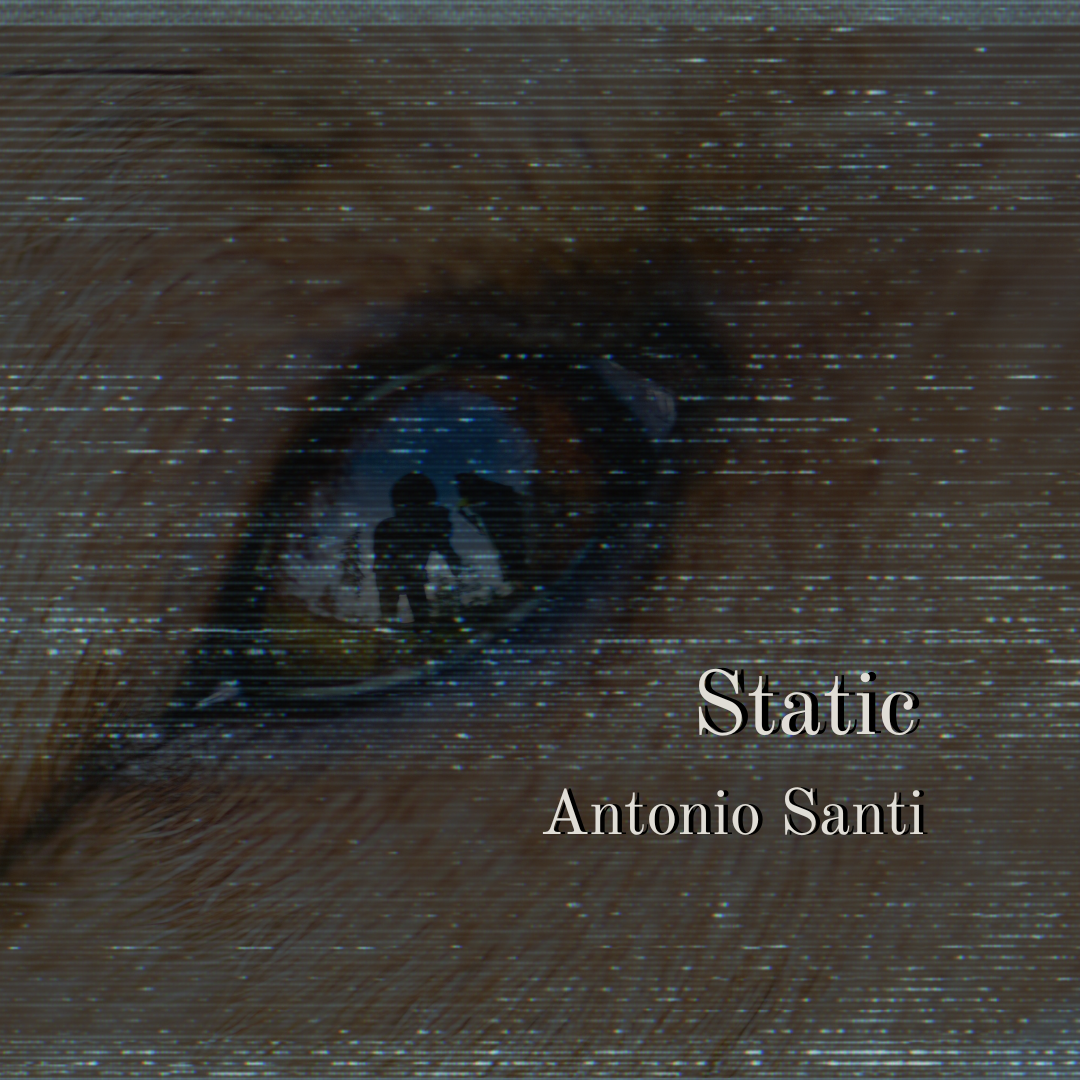
About a month ago I heard her in a dog’s bark. It was likely a Tuesday or Wednesday morning when I heard her voice in a dog’s bark. I locked the door behind me, stepped into the dull morning sun, and there it was: a single bark. I could not see the dog. The cul-de-sac was still and wet with dew, birdless in the too-early spring. My dead partner’s voice was neither the high-pitched yelp of a terrier nor the deep boom of a hound, so I figured the unseen dog must have been a nondescript mutt—a village dog of sorts. That’s how she was. As I lowered myself into the Camry, and placed my cap on the empty passenger seat, I imagined the dog: lean but proud, erect in the dust. I circled the neighborhood, hopelessly searching for the source of the bark. I wondered whether the bark had somehow matched the exact pitch of my dead partner’s voice on a precise word, or if they shared some rasp on the back-end. There was nothing inherently dog-like about her voice. I thought of words like room, rat, ruck. But I couldn’t remember the ways she said those words. I imagined the bark’s spectrogram, the audio cut file: a simultaneous mountain and valley, rising and falling in equal measure above and below the horizontal plane—or one insurmountable peak, mirrored, formed by tiny neon scratches all the way up and down. Then I imagined her voice’s spectrogram: the same scratches, but softer, rising and falling in the wake of two great ships on opposite ends of a flattened world. I wondered where the two voices met, where the ocean’s wake might lap against the mountain or pour into the dog’s valley.
Today I sit—subaquatic static in both ears, clinging to the roof, carbonated, inoffensive, and then nothing at all. Static and silence intermingle and blur. When the headphones come off, little changes, but my ears are pink and wet and tender. You have to know normal to define abnormal. Here, we are actively engaged in the on-going process of knowing normal. Normal is taking off and landing, and what happens in between. This department monitors airspace among other things. Not much happens in airspace. Pilots take off and land through the static; they take off and land in a foreign language. I cannot speak the foreign language, but I do understand.
The static used to keep me up at night, every night—spitting into my open head, sprayed across the popcorn ceiling, and squealing or chirping at unknowable intervals. I found the unfortunate solution: bought my own noise-canceling headphones, the exact model of the Agency-provided ones, and plugged back into the static. A Youtube video titled, “Radio Static Sound Effect” posted by username: ParadoxMirror. My dead partner used to hate it when I wore the headphones at night. She hated the distance between us. At first, it was a quiet hum like white noise, but it gets louder all the time. I must turn it up. Tonight, the static loop will blare in both ears as I sleep. It’s the only way.
I once spoke to the Chaplain about static. He wanted to talk about my dead partner, but I wanted to talk about static. He forced his empathy into an ill-fitting secular mold, and told me the universe works in mysterious ways. The static is radio noise. Radio noise is caused by many things. A child’s backyard walkie-talkie. Text messages. Frozen burritos turning in a microwave. A lightning bolt over the Atlantic. An office of soldiers listening to different airspace in different uniforms. The Big Bang. All of this meaning blends into a single meaninglessness—a hum or drone, and I hear it all the time. The Chaplain’s hands are like a child’s, pristine and clammy.
In the Building, I listen to what happens under and over this static. Today has been like yesterday, and the day before. A Russian MIG takes off over X and heads towards X, as it does, spewing bombs along the way with a single past tense verb. In the beginning, I was surprised by the callous brevity of the verb. Dropped.
The man heading towards X from X speaks with a lisp. I wonder if he’s self-conscious about his lisp. I wonder if childhood classmates mocked his lisp. I wonder if he kisses his wife with that lisping mouth. I know him as well as you can know a man through four words and static. I listen and record his movements. I do nothing but record his movements. I follow him on a digital map. His cartoon plane is pixelated and cute; red to indicate he is a bad guy.
The Building is almost pristine. Everything is white like heaven in the movies. Long white hallways reach in all directions from a central rotunda—a giant spider from above, I imagine. The whole world is here, interspersed with kitchenettes and printer/copy stations—one identical department after the other, organized alphabetically by Target Country. Afghanistan, Albania, Algeria, Andorra, etc. My department is somewhere in the middle. The walking commute from the parking lot is twenty minutes. The analysts are young and disheveled; their pressed fatigues only underscore their disheveledness. Also the white light. They sip energy drinks, and eat processed foods from disposable containers. The sterility of the Building makes them dirty—brings light to dandruff flakes and glistening greasy lips. Noise-canceling headphones overhead, and fast typing. The Bosses mostly wear ill-fitting dress shirts tucked into ill-fitting pants, laminated badges dangling from personalized lanyards. The only physical flaw of the Building itself is the scratch—or scratches, if you look close enough. The scratch is a scar, stretching the immeasurable lengths of the hallways, roughly waist-high, and three to four inches thick, parallel with the floor. The scar reveals the gray beneath the glossy white. A dirty-feeling secret. The scratch is the result of fingers or fingernails or knuckles. Analysts walk along the walls, connected to the walls, and always scratching. To be untethered and free-floating in the center would be unbearable. The carpet there is beautifully plush and damp like moss. We dig into the walls. Even the custodians dig into the walls. The young soldier to my right is wearing a rainbow pin on the collar of his fatigues. It’s Pride Week at the Agency. I think of Vietnam War-era helmets with peace symbols, but realize this is different. There is no draft. We all came willingly. Reasons for enlistment are irrelevant. The young soldier smiles at me the way they all do. They all preferred my dead partner. She was the better analyst, the better supervisor, the better soldier. When she was alive, I convinced myself she was only better because she cared more. But now, I know she was better because she was better. She once sat where the young soldier sits. Her seat remained empty, until today. Now he sits within arm’s reach. I imagine there was a tense conversation in my absence about re-manning the desk. Space is limited; I don’t blame the young soldier, but I do hate him. I hate his different smell—the different way he taps his pen. I mostly hate his voice.
The bad guy in the red cartoon plane says his past tense verb and goes silent again. I record the time and location—scribble the word on my legal pad. This is normal.
Most Agency deaths are suicides, but she wasn’t the type. Because she wasn’t the type, she got a memorial plaque. The plaque hangs silently over our cluster of desks. Suicides don’t get plaques. The Chaplain hates suicide; he’s always throwing pizza parties and shaking hands to combat suicide—once a month he hands out Chick-fil-A sandwiches. He’s a nice man, but he wears too many rings on his child-hands. My dead partner never trusted him. She was Jewish, and he’s some sort of New Age Protestant, but I don’t think that had anything to do with it.
The lispy voice breaks through the static. He shouldn’t be speaking. This is abnormal. I sit up straight, and toy with the volume. The pilot says words I don’t understand. There’s never been a complete sentence through the static, and this feels disgustingly intimate. His voice is steady and controlled like a recitation. A dog barks in the muffled distance. The red cartoon plane disappears, and there’s only gray. I wonder what really exists in the gray. Desert, I imagine, but I can only imagine.
I scan nearby frequencies and things are normal. Took off. Dropped. Landed. But no lisp. No mention of his signature code. I rewind the audio. Something about diamonds? Not the faintest hint of static. All lispy language, and the village dog’s bark. I don’t bother the young soldier. He’s useless. His language scores are bad, and he forgot to shave today. I’m expected to discipline junior soldiers for this sort of thing, but I never do. He just smiles at me. The more senior analyst is eating her lunch, dinner, or breakfast. The Building is timeless like that. No windows and flat fluorescence overhead; we’re all ugly and sexless in the fluorescence. She seems to be enjoying that styrofoam bowl of oatmeal, so I don’t bother her. I scribble heard nonsense on a legal pad—that single phrase over and over.
Diamonds are the teeth of tigers by the sea.
Diamonds are the year of the river ant.
Diamonds are old bumblebees in the desert.
I scan through a loop, jumping from one frequency to the next. Foreign ground control is unperturbed, jocular even. Planes take off and land all over the country at steady cadence. I watch their flight paths like thin brush strokes across the gray. This can’t be possible. This is abnormal. Planes don’t vanish. Dogs don’t bark at 50,000 feet. The cartoon plane is a real plane made of nickel-steel, aluminum, and titanium. And that lisp belongs to a real man. There is nothing. The hissing and sputtering and occasional squealing is mocking. I hear the phantom words in the static. I hear the dog’s bark, and follow its spectrogram: the mountain-valley confirms. Diamonds may be goats. They could be landmines or desert djinn.
Now I search open source, local newspapers and opposition social media on lowside. Keywords like plane, aircraft, crash, and the region I’m now positive is desert. But there are villages. Villages everywhere. I zoom into the lifeless gray map, and find the transliterated names. The young soldier belches. One village has a strange name: Sexy or the singular Banana. A google image search on lowside reveals very little. Adobe houses like egg cartons, dry and reddish, bleeding from the landscape. I imagine a cartoon plane made of nickel-steel, aluminum, and titanium coming down from the sky like incandescent terror. Villagers doing village things in egg carton houses with their hardened village hands for the last time.
I click Street View and am surprised to find anything at all. There’s the village dog, waiting, staring into my yellow cartoon man or the camera-mounted vehicle he represents. The village dog is lean but proud, nondescript, and I know her bark. The village dog sits, erect in the dust, composed of this dust or leaking this dust—one of those egg carton houses behind her. She is inexplicably dynamic in the static blur, just watching. There’s a warmth there. I could stay forever, staring, but this isn’t her—not the dog. This is a village dog of the past, now a series of processes, a digital rendering of a once-alive village dog that’s likely dead or somewhere else. She was only perfect for a captured moment. A moment stolen by a camera-mounted car, and gifted to me.
My dead partner didn’t mind the static. She didn’t mind the past tense verbs. She didn’t mind the uniform. She didn’t mind. We had two years left on our contracts when she died. We had plans to backpack South America, but then she died. At the time, I thought we both wanted to backpack South America, but only I wanted that. She was just nice about things. She never wanted to run away. She hated when I listened to static in bed. She was born to be a general or Hillary Clinton. I’ve always hated generals and Hillary Clinton, but I loved her. I’m sure of that.
Years ago, a pilot went down in different airspace, and was burned alive. He did not burn up in his cartoon plane, but instead was burned in a cage. Hateful men captured the fallen pilot, shoved him into a real cage, doused him in real gasoline, and burned him alive. When asked about the Iran-Iraq War, Kissinger said, it’s a pity both sides can’t lose. That’s mostly what it felt like watching the pilot burn up in his cage. The fallen pilot yelped and cried. My partner and I watched him burn, while chewing Chick-fil-A sandwiches from the Chaplain.
We used to do normal things, too. We watched reality TV, ran half-marathons, listened to country music, took LSD twice, ordered pizza with mushrooms and pepperoni, fought about the future, hatefully compared one another to our mothers, cried in each other’s arms, planted a garden, went to Lake Tahoe, stared at the popcorn ceiling for hours, cut each other’s hair, got fat in the winter, and listened to vixen foxes at night.
The end of shift looms, but I am here. Twelve hours and I am here. The young soldier asks if he can pop out early to hit the gym, and I nod. The more senior analyst throws her styrofoam oatmeal bowl in the garbage, and hums something polkaesque. The hums would be maddening if it weren’t for the static. The static washes over her hums, somehow pixelates and shatters them. The spectrogram of her hums is larval—bulging slightly in both directions. The spectrogram of radio noise is the waist-high scratch running the lengths of the hallways: a solid band.
I’ve written every possible translation and transcription of those words.
Diamonds are the tears of finches in the trees.
Diamonds are teacups.
Diamonds are fingernails for giants
Diamonds are cancerous and must be destroyed
Diamonds are the fangs of dogs in the night
Diamonds are the screams of vixen foxes
Diamonds are death and the end of all things
I’m only sure about Diamonds. Diamonds could be the name of his wife. Diamonds could be a city. Diamonds could be a metaphor. Diamonds could be a codeword. Diamonds could be his childhood dog.
The day shift arrives, only slightly healthier than the night dwellers. The more senior analyst tells me she’s heading home, and asks if I need a hand with anything before she hits the road. The offer disgusts me. I want nothing from her. I tell her to have a nice night, but hope she goes missing over some desert village.
The day shift soldiers are even gentler with me. My daytime counterpart asks if we’re surging. I tell him everything is normal. He asks something personal, but I can’t hear over the static. I nod and smile, and tell him I’m just going to finish this one last thing up and head home. He tells me not to work too hard.
I listen to that diamond phrase on repeat. The pilot is very slightly overweight, just a few months of moderate exercise and slight caloric deficit away from being in decent shape. I hear this in his breathing. He comes from somewhere rural and poor. I hear this in his accent. He has either seasonal allergies or a cold. I hear this in his sniffle. I see him so clearly now. Mid to late thirties, handsome the way all pilots are handsome, just over average height, and hair shaved down to skin on the sides with a bit of volume on top.
Still nothing on the news sites or social media. No bragging from opposition forces. No regime mourning. No fallen planes or burning pilots. My daytime counterpart taps my shoulder, and asks me to repeat myself. I tell him I didn’t say anything. He says I’ve been mouthing some foreign phrase, over and over.
Foxes once lived beneath the Building. My dead partner loved the foxes, and snuck out to watch them at night. She rarely indulged in anything, but she watched the foxes creep and crawl from their hole. The hole was on the backside of the Building’s foundation, and we would walk down there before dawn—locusts chirping through cool purple mist. She walked with her arms folded in the small of her back. She only walked like that in uniform, and I will never know why. We would stare into the hole, and watch the orange and pink bodies pulsate and squirm as one. She cried sometimes, watching the foxes in their hole. She told me once that she felt a strange sense of ease knowing the foxes were beneath us. She tapped her boot on the carpet, and knew they were listening.
When mating season came, the vixens screamed their horrible screams, rising from a chortle—insectile and throaty, passing through sick laughter, until climaxing in the primate’s murderous howl. They screamed from their hole, and out in the bushes. They screamed at the night and silenced the locusts. The Building maintenance crew followed their screams. The hole was sealed shut, and we could no longer watch the foxes.
I’ve been here too long. It’s hard to say exactly how long. They’re all so careful with me, because I am fragile and precious the way all fragile things are precious. The daytime soldier who normally sits at my desk has relocated without a word. All awkward nods and smiles. There is no plane crash. No plane. There is no black-veiled widow mourning her lispy husband. But I hear him on playback: taking off, dropping—and those unknowable words he recites in the digital past. There is no distress call, unless these unknowable words are a distress call. I grab a coffee-stained department manual from the shelf, and flip through mayday distress calls in foreign languages, but there’s nothing about diamonds. Of course there is nothing about diamonds or dogs or vixen foxes at night.
I’m so tired, and the static is deafening. Industrial noise and screams and lightning bolts over the Atlantic. I’m muttering those unknowable words, and the dayshift is politely concerned. They’re sneaking conversations about me—about my dead partner—about the Chaplain. I hear nothing through the screams of vixen foxes at night. But I feel a hand squeeze my shoulder with care. I look up at my daytime counterpart, and he stares at the highlighted spectrograms on my screen.
“Sergeant,” he says. “I think it’s time to pack it up.”
“I’m almost done,” I say through remnants of the Big Bang.
“It can wait until tonight. You’re back in six hours. You need some sleep—”
“I’m almost done.”
“Can I take a listen?”
He reaches for the headphones, but I pull away, hand back on the mouse.
“I’m almost done.”
“How are you holding up? I can’t even imagine… she was—”
I can no longer hear him. The radio noise swaddles, tongues both ears, and surrounds me in something warm and electric—a viscous goo of cilia tickling and tracing goosebumps. The unknowable words are there, and his lisp, floating. I hope he is alive. I hope the village dog is alive. I hope foxes are alive.
After a few minutes, a new hand squeezes my shoulder. Too many rings on a child’s hand. The Chaplain is speaking in radio noise. He stares down at me with cloying pale eyes. His mouth is wet. He screeches, and chirps, and squelches and hums. I nod, and he smiles, static creeping through the gaps in gray teeth. He offers his small, ring-adorned hand. I remove the headphones, and take his hand. He leads me out past Andorra, Algeria, and Albania, past analysts typing in the fluorescence. A child laughs through walkie-talkie. A burrito is still frozen at the center, circling. We both dig into the wall; my chewed fingernails follow his miniature knuckles through the cold gray.
The Chaplain’s office is a place for free coffee, acoustic guitars, and pleather couches. He sits behind his particle-board desk, and I stand. The walls are lined with shelves of Bibles and self-help books. He is squealing and screeching at weird intervals. He reaches into his desk drawer, smiling all the time. I am smiling too. He is humming like an industrial refrigerator, warbling, and cooing, because he has something special for me. He places a wrapped Chick-fil-A sandwich in front of me, beside a miniature Newton’s cradle. I take the sandwich, and thank him.
“Head home, and get some shut-eye,” he says over the noise. I nod, and squeeze the sandwich through its aluminum wrapper.
Jules was a person, and that was her name, and we once drove with the windows rolled down in winter. We smoked cigarettes without inhaling, and drank hot tea with milk. But I can no longer see her like that, healthy with hair blown back in the winter wind. I can only see her sick and small. That’s probably how her soldiers remember her, swimming in fatigues, pants billowing from combat boots, and swallowing the laces. I remember the moments, but she’s not there. I hear her voice, but that mouth is not hers.
Everything is white out here in the daytime. I walk straight ahead with eyes shut, patrol cap pulled down past my brow. A young voice customarily greets me through the noise, and I grunt. I step through the turn-style gate, and into the parking lot, squeezing the chicken sandwich, turning it to pulpy mush. I unlock the Camry with three beeps, and I hear no dogs barking in the distance. I lower myself into the Camry, remove my patrol cap, and start the car. AM radio noise blares, and I hear lightning. I laugh like a vixen fox at night. My voice is digital, and everything is red. My reflection is red and hilarious. I put the car in reverse, laughing in red mating calls.
I drive past the barracks, the PX, and gas station. I scoop Chick-Fil-A mush into my laughing mouth. I turn up the radio, and do a fun little dance with my hands. I hope someone is following me on a gray map. I hope they watch my cartoon Camry crossing from X to X. I pass through the gate, and now, I’m flying. My hands glisten with mush, my red lips glisten in the white light. I am flying, and muttering unknowable words. I am flying. Taking off! I scream in lispy foreign language, chicken mush sticking to my teeth. I soar past gray pawn shops and a strip club. Dropped! I scream, scooping more mush into my red mouth.
I am so fast, and so loud, and I see the village dog—erect in the dusty approaching distance. I calmly recite those unknowable diamond words, and the dog barks. I swerve into silence.
Antonio Santi (he/him) is a writer/translator from Baltimore and an MFA student at Johns Hopkins. You can find him on Instagram @sonytanti_.