
My father, as an untamed young hunter and fisher, was camping near a stream when the volcano Mt. St. Helens blew on May 18, 1980. Far from phone lines and newspapers, he knew that something strange had happened. The stream turned as black as the coal his ancestors had mined.
I came along eight years later, practically born to fish. My parents had met in a salmon cannery on a wild Alaskan island a few years after the eruption. They saw each other across a metal work table, my mother spattered with fish guts, my father in full rain gear and aviator sunglasses, his rubber boots in the salmon-blood gutter because he was too tall for the table. They were soon married.
I started life in 1988, between lakes Washington and Sammamish, where the suburbs of Seattle would someday be. All around us was water, fresh and salt: lakes, streams, and inlets forming the great estuary that is Puget Sound. It was a matter of fact that I would fish, just as I would read and write and play.
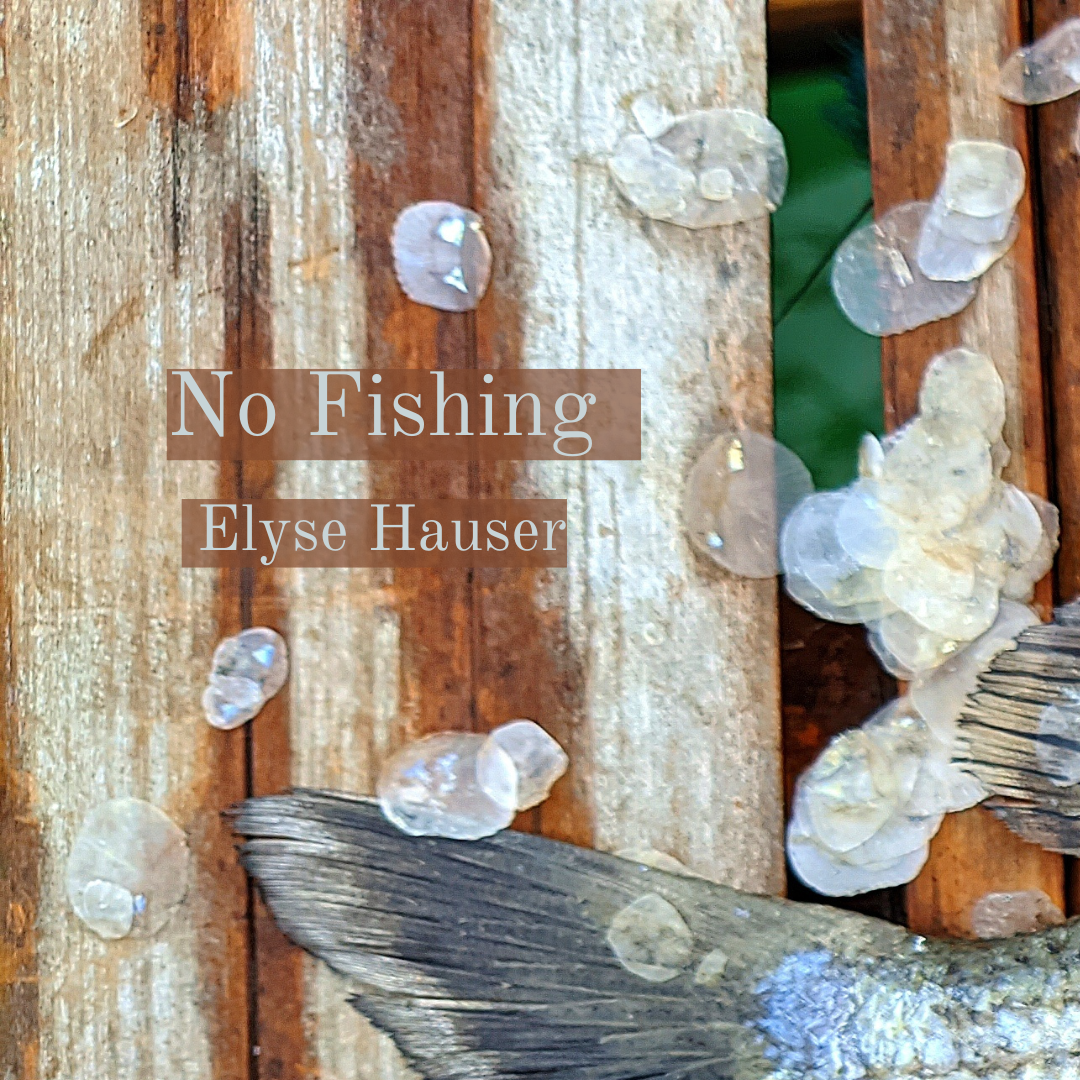
I learned that fish could be caught in lakes, or rivers, or oceans. That there were different species, with different tastes, in different places. Though it was a far cry from subsistence fishing, we cooked what we caught. My father said catch-and-release was needlessly cruel to the fish, not to mention less satisfying for the humans. He’d clean them on the driveway in a flicker of scales and a splash of guts while my brother and I watched. Translucent orange eggs spilling out meant the fish was female. It enticed me, the idea that fish could hold secrets inside.
But I’m an adult now, older than my parents were then. And the fish hold different secrets today.
In 2001, the Duwamish, Seattle’s only river, was declared a Superfund site: a place so toxic the federal government is tasked with cleaning it up. The city’s formidable industries, including Boeing, had long shunted pollutants into its waters. My father once worked at Boeing as an electrician. In my early-childhood mind, the company was grand, a link to far-off places, though I’d never been on a plane. But now Boeing’s known for putting out deadly-faulty aircraft, and missiles used toward genocide. The Duwamish remains contaminated, its fish and shellfish poisoned.
This is in my mind when I look out the passenger’s window of my boyfriend’s car and see the river, wending green and improbable through the city. Once, when my parents were still young, people fished safely there. It does not look polluted now. You could catch a fish and think it’s just a fish. But I know better.
As the current century progressed, local salmon started to die before they could spawn. In 2020, researchers at last linked these deaths to tire dust, bleak particles that run from increasingly-congested roadways into increasingly-empty waterways. The region is gradually switching to electric cars. Their eerie hums waver in the Seattle nights. Though they forgo tailpipe emissions, these heavier cars shed tire dust even faster.
My father once could name every type of salmon by taste, sometimes merely by the sight of the fillet. But now, in tainted modernity, the species elude him. I know he’s getting older, more prone to mistakes, but I also can see what he sees. The fish are not the same. The color of the flesh is muted; the fat does not melt the way it once did; it must be salmon, but he cannot name which one. Over dinner, we wonder if the salmon are evolving, if modernity’s threats are changing their very nature, if the commercial fishers can no longer recognize what species they’ve caught.
In 2022, Washington state issued a warning for “forever chemicals” in fish, another mark of manufactured modern life. Species from the lakes I’d been born between—Washington and Sammamish—were officially unsafe to eat. They’d likely been laced with the invisible toxins for years. But visible, tangible trash is a threat, too. Scientists have learned that plastic in waterways breaks down to microscale and nanoscale, almost too small to be imagined, and ends up in fish bodies. Globally, some sixty percent of tested fish have been found with microplastics inside.
When we eat them, those plastics move into our bodies, a pathway with effects we still don’t understand. We are polluted waterways, too, my parents and me. Do they hold more plastic, for having lived longer? Or do I, for having grown up immersed in the most polluted era?
I’m in my mid-thirties now, past the age my parents were when they started to take me fishing. Years cloud the memories. My father’s mobility isn’t what it was. Nor is my mother’s mind. He’s had two knees and two hips replaced but still limps; she has episodes of what doctors call “transient global amnesia.” Any fishing trip we’d plan may well be the last for them.
We could get new permits, dig out old rods, relearn how to bait and cast. But in the polluted water-land that western Washington state has become, we’d have to forgo key parts of the memories. Stilling the fish with swift blows to the head, cleaning them on sun-warmed concrete, frying them in pans, serving them with bright vegetables. As an adult, I could participate fully in these tasks, and I feel a sense of responsibility to learn the simple things that shaped my young life. But putting fork to mouth becomes foolhardy now. We’d take in not just the pollutants we that know of, but others we have yet to find.
The world has always contained things toxic to humans and other animals. Yet natural toxins, like a volcano’s black ash, were often easy to trace, ephemeral, even ecologically useful. Now, humans are discovering surreptitious new poisons in waterways, in fish, and in our own bodies, consequences of irresponsible modernity. In a way, fish brought me into this world: my parents first met at the cannery because of salmon. I cannot say for certain that those same fish will exist when I reach my parents’ age.
My parents, too, follow the fish news, the effects of contamination and habitat devastation, as the region we call home has turned from working-class backwater to high-tech metropolis. In the stores, we find fish brought from Alaska, where we think it might be a little bit safer. Still, they’re different, smaller, discolored. We cook the fillets of ghosts. They’re what’s left of our shared past, a world that no longer exists.
And should the fish ever recover—if they can recover at all—I know it will be too late for us to catch them together. Perhaps there’s still time to right these ecological wrongs. But by then, my parents’ fishing years will be over.
Elyse Hauser is a freelance environmental writer from the Pacific Northwest. A lover of all things aquatic, she often writes about water and its ecosystems, from rivers to the deep sea. She has an MFA from the University of New Orleans, and has also learned from the Center for Investigative Journalism in Bergen, Norway. Find more about her at elysehauser.com, and read her deep sea newsletter at notesfromthedeep.substack.com.