
Divorced and in my fifties, I entered a relationship with Ben. At 64, he was compact, attractive, and also divorced, with wavy gray hair, and hips even slimmer than mine. Ben’s tender, perceptive care for me was lavish, almost Godlike–except when it wasn’t.
“Inconsistent” didn’t begin to capture his energy. When he came over, his first gesture after kissing and hugging was to cradle my face in both hands the way I hated when my mom did it. But also, without warning, he could become like a one-dimensional tin soldier in a tabletop game, jerked by unseen levers, rigid and unrecognizable. I was aghast at his contrasts.
When Ben and I met, his unconditional love felt like the perfect fit for me. As a kid, I was shamed for being wrong, inappropriate, or “too much.” I wanted to wear my frilly-socked feet strapped over the tops of my Mary Janes, rather than inside them. Instead of cleaning up when directed, I heaped my mess in the corner and promised Mom it would turn into compost. I said things to my parents like, “What do you mean?” “Why are you asking that?” “That’s weird!” “How come I have to?” “I don’t want that,” hoping to probe and learn about life within the safety of being myself.
Instead, they said I was “too sensitive” or “too picky.” When I pressed again, wanting to connect with them, they labeled me “belligerent,” or called me “Miss Persistence.” I brought these formative beliefs into my first marriage, where they partially healed, but decades later, deep-seated places in me still longed to be seen, understood, and appreciated.
With Ben, they were—in ways I hadn’t known were possible. Ben had a unique take on shame; instead of being hidden and shunned, he believed shame deserved to be explored. His gentle, intuitive listening helped me to reframe my inner judgements, and value the childlike parts of me that had been squashed. It was wonderful.
But as we spent more time together in growing intimacy, the calm, loving waters of our relationship would often get choppy in ways I couldn’t explain.
Repeatedly, back home after an evening out, Ben would suddenly go stiff and quiet, fumbling in his pocket as we walked up the front path. Scowling like a mean teacher, he’d find the key, make multiple stabs at the lock, forget to turn it, and jerk the door handle. Then he’d groan and jerk it again, this time with his shoulder thwacking the door as if it were stuck.
“Ben, you have to turn the key!” I’d exclaim. “What’s going on? Do you need me to do it?”
“No, no, it’s just so frustrating!” he’d huff. I was mystified. This man who, if called on, could probably rebuild a WW II P-51 fighter engine, was suddenly unable to manage a simple lock.
“It’s the same lock as last time!” I’d chide, bummed that our cozy night was being derailed.
Or, near the end of an intimate weekend at my place, with plenty of time left, he’d abruptly stop a fun conversation, rush around packing his bag, and hustle out the door with the kind of default goodbyes I expect from a delivery man: “Have a good week!” “See you next time!” “Take care!”
And on a day when he bemoaned yet another Google-calendar screw-up, I offered to download his onto my laptop as well, to help him streamline his schedule. Since we both knew I was better with details, I thought he’d be relieved.
“No chance!” he barked, glaring my way with another face I’d never seen before. “You’re not getting your hands on it!”
Each time, over and over, I was floored. Who was this man?
When those jarring shifts happened, I’d get mad, explain what I meant, ask what was going on, and eventually cry when he couldn’t get it. At those times, I didn’t know what to make of him, or of our relationship.
Now and then I mused on a dream I’d had soon after meeting him. Sitting bareback on a horse behind Ben, my arms encircled him. The horse was tiptoeing along a tightrope, three miles above the sea. In the dream, Ben turned around silently and embraced me.
Toward the end of 2013, a year in to our relationship, I started delicately describing the eerie energies I sensed in him. I told him his memory lapses and mind-changings hurt and confused me. I suggested therapy. He mentioned again the therapist he’d seen briefly a few years before, to help him detach from his abusive ex-wife.
I said, “Well, you might need to do more therapy, and maybe go deeper.” I asked kindly, numerous times, while we curled on the couch, or when I was squeezing his neck with the intensity it craved.
Ben’s vibe changed. In a detached voice, someone unlike him lectured me with, “That’s not helpful. Autonomy is crucial. No one can tell what someone else feels. You’re crossing a boundary.”
“I hear you that it seems like that,” I replied. “I can’t know for sure what you’re feeling. But I love you! And when things get weird, it’s exhausting. We pay a ridiculous price.”
Fifteen months in, his chameleon-like behavior could exasperate me. If I explained what I’d seen, Ben would say, “Well, maybe,” or “You could be right,” and then go back to stonewalling. I pleaded with him about therapy, pointing out his layers of defense. Occasionally, I let myself get angry. Eventually, sobbing, I said, “I don’t think our relationship is sustainable.”
“OK,” he said. “But only 12 sessions.”
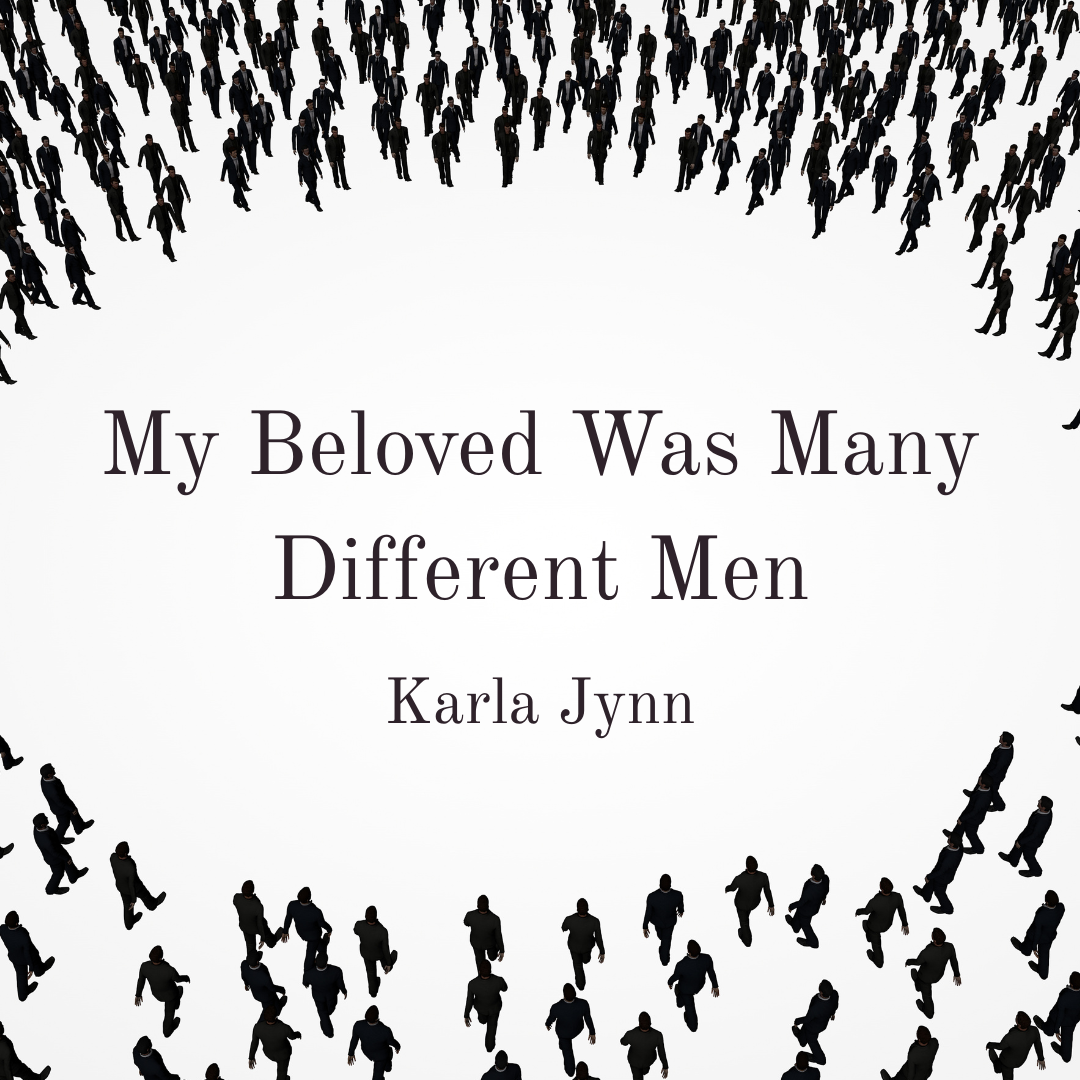
We learned that Ben had Dissociative Identity Disorder (formerly Multiple Personality Disorder). DID is caused by severe childhood trauma. During experiences too painful to handle or remember, slices of the psyche split off from consciousness and disappear. These form separate, one-dimensional, alternative personalities–called “alters”– in the unconscious mind. When something triggers them, the person “switches,” meaning alters take over unexpectedly, acting in ways the dissociative grownup, by definition, doesn’t notice.
Those who knew Ben before we got together, I later discovered, did not know he was dissociative. His success and popularity as a minister, therapist, and classical clarinetist masked the hidden compartments inside him. His Father, Teacher, Better-God-Guru, and Therapist alters did their jobs, keeping his lifelong rage and grief repressed.
Ben started Eye Movement Desensitization and Reprocessing (EMDR)—a trauma modality he’d used expertly with his own clients—in 2014, and continued for four years. Once a week, he took the train downtown to his practitioner, who helped him excavate rough gems from his traumatic past.
He’d come home afterward and collapse for a long nap. When he was ready, we’d work with his experiences together. We confirmed our hunch that dissociative alters require attention, beyond just with a therapist, to be loved and examined as the smart coping mechanisms they are.
My passion for decades had been supporting myself and others in working through difficult emotions, to better understand the ways we function. Like a surgeon, I probed the depths of being with microscopic precision, helping consciousness flow where it needs to.
But things with Ben were different. I often felt annoyed, angry, or hurt, even though I knew his alters needed to make themselves known in real time, with a safe person who understood about childhood protective functions. I worried I was wrong, over-reactive, or too persistent—those same childhood fears that retreated in the good times of our relationship.
Over and over, Ben and I explored his alters, especially when they were projecting their feelings onto me. With loving tenacity, experiences that had always been suppressed rose up to the surface.
One of his alters, Boiled Baby, was born from weeks of feverish screaming alone in his crib. Ben knew he’d contracted TB when he was six months old, and been left by his mom to “cry it out.”
A few times when Ben and I were in the car, with winter coats and heat blasting, he wouldn’t notice he was overly warm until Boiled Baby, with terrified eyes, would explode, “Help! Help! Let me out!”
I’d yell, “Pull over! Let’s get your coat off!” And we’d wait till he was safe again behind the wheel.
Boiled Baby’s flip side was instant shivering. When he switched to that, he’d fear he was going to die.
Another alter, No-Name, appeared when four-year-old Ben traveled from Tucson to Chicago after his beloved grandfather died by suicide. Promising chocolate, one of Ben’s uncles lured him to the attic and played with his genitals. I came to recognize No-Name through Ben’s sudden, inexplicable silences. Movies with sexual abuse references could make Ben “disappear,” leaving windup-toy versions of him sitting next to me, spouting rote comments.
Bart was an alter who developed from Ben’s never feeling free as a child to speak up or act out. Bart would cut short our warm conversations with, “There’s nothing going on.” “I’m fine.” Or abruptly assert, “I can’t talk about it.”
Loner, Laughing Boy, Questioner, Hurt Husband, Watcher, Clarinet Player, and other alters from Ben’s shapeshifting landscape showed up when they were ready.
And eventually Armed and Dangerous came out, the “defender” that threatened us the most. At age 13, Ben was sexually groomed by a looming, pockmarked, right-wing militia guy who convinced him the world would end soon. Swayed by the abuser, and unable to say no to a cause his mom strongly believed in, Armed and Dangerous spent many hours at night, marching in the Arizona desert with grown men he didn’t know and wasn’t allowed to speak to. All through high school, none of Ben’s friends had any idea of his underground life. Only his parents did, and they were polarized over his involvement.
Of all the alters, what I’d glimpsed of Armed and Dangerous was the most strikingly different from the essential man I knew. By nature, Ben was chill and self-effacing. He stepped back rather than claiming his rightful place in my co-op’s checkout line. He generally stayed quiet at social events. And he was reticent in traffic, preferring to defer rather than speed or keep pace.
But one day, after a driver cut in front of him, Ben’s head shot forward, and Armed and Dangerous barked, “I could shoot him!”
I knew he wouldn’t, but I still was astounded at this aggressive energy. Later, I asked if he’d just been annoyed at that driver in the normal way.
“No,” Ben admitted. “I wanted to get a gun.” This confused me; I had to clarify a few times before I believed him.
These splintered parts of Ben required us to engage in multiple processing marathons, in our ongoing quest to get to the bottom of his traumas. Sometimes we made progress; for example, with my support, Ben let Bart loose in his imagination to smash the windows of his childhood home. As alters got to see and express themselves–intentionally, with safety and support–their defenses softened and dispersed, slowly becoming obsolete.
By 2016, Ben’s alters as they played out in our relationship had become one of my main preoccupations. I was his lover, mirror, and honest commentator, keeping reams of detailed documents about our upsets and discoveries. Passionately committed to this endeavor, I never questioned the time I spent–though in keeping with my mindset, I sometimes judged myself for not questioning it. And it took a toll on my anxiety-prone solar plexus. Luckily, I had close friends who were savvy enough that I could cry or safely vent with them.
Frequently, Ben seemed to slip back and lose ground; different alters respond to familiar situations differently. When he would switch again, we’d go around and around, with me inquiring while Ben side-stepped or defended.
Finally, the alter’s linear, compartmentalized energy lessened just enough to let “real” Ben step into the picture and see himself more clearly. Then, instead of seeming deaf, he could begin to hear my surmise about what might be going on.
One day after an especially long bout, he wrote in an email from his office, “I feel so lucky to have a partner who can tune in the way you do, and just now I’m experiencing a down side to this. It’s dim and distant but definitely there–a protector part of me feeling threatened and closed in on–like an army being flanked by the enemy. Even though the adult me feels excited that maybe I can come to love you and others in my life more consistently.”
That “flanked by the enemy” part really stung me; I was his best-ever ally! But each time, after his inner storm retreated, the most tender, accepting man on the planet was present with me again, acknowledging why it was hard.
Knowing he frequently put me through the wringer, Ben’s go-to offer was massage, a simple, loving means of bridging the chasm between us that his alters’ suppressed rage periodically created.
I adore him beyond words, I would think, lying in bed with his fingers stroking my neck. As taxing as this is, it’s exactly what I’m meant to be doing. I’d always considered myself deep, but this man’s needs had pierced to the molten center of my earth, my flaming destiny. In 2005, from within an exalted state of awakening to new perspectives on life, I’d written, “To be inner salve for those who burn is my inferno of desire.”
“Is this leg warm enough?” he asked, tucking the covers around it. “If I’m being too hard or too soft, just tell me.”
Slight and nimble, Ben perched cross-legged like a pixie on the floor and whispered, “Remember, just relax. Nothing else to worry about. If you can, turn your mind off and let me take care of you.”
After a while, he bent his head close and said, “You’re right that I was way more switched than I knew.”
He didn’t mind my pickiness, and cherished my lifelong sensitivities. Maybe “Miss Persistence” was just what a dissociative partner needed. Gradually, I stopped judging my probing, or fearing I was “too much” for him. I came to grasp that my intense responses to Ben’s alters fostered his healing instead of complicating it.
I sighed, closed my eyes, and pictured clouds, trying to still my hyper-vigilant brain. I loved how much I helped Ben. But my emotional attunement was at such a high pitch that the process also drained me. I sometimes wished I didn’t have to carry so much, and wondered if his healing would ever reach a place where it required less of my attention.
A major turning point in Ben’s journey of re-integration came on March 6th, 2017.
For months, Armed and Dangerous had simmered around us, projecting his ex-wife’s bullying behaviors onto me. It seemed like Armed and Dangerous was “protecting” Ben from the “risks” of our decision to get married.
That March day we planned to garden together and practice salsa dancing. But I began to feel whiplashed by Ben’s uncharacteristic snippiness. When I asked him a clarifying question, he chopped off my next sentence with, “OK, I’ll never say that again!”
Sensing the swelling strain between us I said, “We don’t seem in a good place. What should we do?”
With a flat affect Ben declared, “I think I’ll leave until tomorrow,” and went upstairs to pack.
I lay on the living room floor and started to cry. This breach felt different, as if our infinitely-stretchable connection was trying to snap.
When Ben came down with his bag on his arm, I risked, “You leaving doesn’t feel right.”
His tightened lips and smoldering face told me Armed and Dangerous was fully in command. Some instinct told me my only chance of breaking through was to match his energy.
I spoke more forcefully to him than I had ever dared to before. “You’re acting like a victim, trying to recreate your old marriage.”
I gulped, unnerved and also strangely composed. I’ve never spoken to him so assertively, I thought. He adores me. What the fuck am I doing?
Ben gripped the doorknob. He yelled, “You’re crazy for thinking that!”
I shot back, “You’re distancing yourself! Blaming and projecting onto me!”
Ben looked ten years older than he was, a stranger ready to flee. Instead, he edged slowly away from the door and leaned against the wall across from me.
I asked, “What does Armed and Dangerous need? What is he afraid of?”
Ben waited, staring with narrowed eyes. Breathing slowly, I waited too.
Then he mumbled, “Armed and Dangerous is afraid of rejection. He won’t be able to survive.”
There it was.
My briefly-hidden love for Ben came flooding back. I said many gentle truths to him—truths that Ben, though not Armed and Dangerous—knew.
“This isn’t rejection,” I murmured. “I’m here for you.”
Eventually he agreed to sit down with me. Gradually his combative fire drained, leaving him less and less defended, until he said, “I feel half like myself.” His robust color returned.
“It’s so confusing,” he muttered. “And so embarrassing.”
I understood those feelings, but to me, given what I’d learned about Dissociative Identity Disorder, it seemed clear. Armed and Dangerous’ habitual stance of anger and blame was easier to access than the primal fears of abandonment that had surfaced that day.
Ben’s face softened, and he admitted how terrified and rageful he’d been. Slowly, he returned to his real self. Exhausted, we went upstairs to bed and lay with our arms around each other.
“I’m sorry, Honey,” Ben said. “Sorry it took me so long to get back here.”
Abandonment had made the horse lunge and the tightrope swerve, but nothing plunged to its death.
We got married that fall, at a simple ceremony in Tucson, Ben’s birthplace, with his beloved Catalina mountains in the distance. He played his clarinet for the handful of loved ones gathered in the courtyard, with Bird of Paradise flowers blooming all around us.
For the next four years, we veered in and out of his healing adventures, always moving forward, but also never done. Toward the end of 2021, I was pondering a possible month-long trip to Colombia, to be with one of my sons who toured there with his band each year. Ben planned to stay home and work.
As we discussed it, Ben said things like, “You don’t usually travel that long,” “Won’t you miss me?” or joked, “Who’s going to pack my lunch?” We laughed about it, because Ben’s Loner alter in our early days had always been the one who wanted to dash off forever to Alaska.
Because I could sense rumblings inside him, I kept checking in. “I feel something hidden is going on. If that’s true, do you know what it is? Can we get to the bottom of it?”
Ben said, “I’m exploring it on my own. I want you to be free. I don’t like burdening you with feelings that are mine to take care of.”
While I loved the growth that signaled, and appreciated his deep desire to support me, I also felt uneasy about the disturbing energy. I went back and forth in my head, fretting about whether we’d be OK.
At first, he processed his emotions by himself, without input from me. Unlike other challenging times, we didn’t dive in and explore them together. He did share outlines of his fears—that I would find another man I wanted more than him, that I wouldn’t come back, and that I would die there, leaving him bereft. His brain knew those weren’t true, but I could tell he was struggling.
I had no idea how much until after he spent three nights in a different bedroom. On the third morning, he came downstairs to where I was working at my desk. With a blanched face and his sleep shirt askew, he slumped in the chair across from me and solemnly said, “I just can’t handle any of this.”
I was shocked. Ben had come so far; for a year, he’d been much more consistently present, in himself and with me. But now, engulfed by his ominous cloud, I wondered, what does it mean? Should I cancel my trip? If I do, will that feel right for me?
I set aside consideration of my travels; we could get to that later. The crucial need was here, now, in listening.
Ben described how his heart had pounded so hard during those nights that he barely slept. He’d get up and check his blood pressure–high but not dangerously so–and then lie back down in bed as the hours passed, awake and sweating. Sometimes the sweating switched, and Boiled Baby would be left shivering, thinking about suicide. Other times, his Hurt Husband alter appeared, obsessing over the betrayals of his ex-wife’s affair. Bart’s fury hovered, trying to find relief. His Loner alter thought up plans for escaping into the desert on his own. The alters circled, around and around like a carousel.
And Armed and Dangerous stood guard over all the parts as they cycled through cataclysmic feelings, waiting to grab a gun and annihilate the “enemy.”
I knew Ben had been troubled, but I was stunned to learn he’d hidden the depths of his worst-ever feelings from me. During those days, he’d gone to work, come home subdued but fine, eaten dinner with me, done dishes, watched Netflix, and tucked me in—before going to the other room to wrestle with horrific sensations.
Alone in bed, he had teetered on a razor’s edge between complete identification with each alter’s feelings, and just enough adult co-consciousness to grasp that nothing bad was truly happening. Over and over, he reminded himself, “That was then. This is now.”
He revealed to me that back in 2017, after Armed and Dangerous had blasted into being before my eyes, Ben had written the word “ABANDONMENT” on a slip of paper, to remind him of his bedrock wound. Then he’d rolled it up and stuffed it into the muzzle of a heavy bronze canon his great-grandfather had made. The canon lived on the shelf next to his clarinet reeds and a framed photo of me at age two, running and smiling joyfully.
Ben said, “Last night, in torture, I vaguely remembered I’d written something important. I stumbled out of bed and pulled the piece of paper from the mouth of the canon and stared at it, trying to connect with what I’d written.”
I gasped. Tears began to prickle my eyes. I moved over closer to him and rubbed his stubbly cheek.
For the first time in his life, Ben was able to consciously brave sensations–at the cellular level–that he had held but never fully felt, since his young self had survived them by dissociating.
Covert energies that had always driven him were now much more at his command. He’d wrangled their intensity on his own, rather than projecting it onto me. That was huge progress.
Also, though, it felt catastrophic. On the one hand, I knew self-championing was a landmark of essential healing; his certainty in the moment that he absolutely couldn’t handle my travel plan meant that his rudimentary being was completely owning and standing up for itself. But on the other hand, I wasn’t his therapist, I was his lover! If I didn’t accommodate him, would our relationship collapse?
As we talked, Ben told me the whirlwind of feelings had receded. No longer in a “miasma of pain,” his body was notably calmer.
“I swear it was on its own trajectory,” he said. “I couldn’t stop or even slow down the sensations. I felt like I was dying. I’ve never known such galling, desperate, loneliness.”
We both knew loneliness was a cornerstone of his trauma, but he’d never actually experienced loneliness, especially not with his body. I was surprised again that he hadn’t called on me to shepherd him through this ordeal.
In a while, his outlook seemed more grounded, less haggard. He went to the kitchen and started his coffee ritual. We talked more as he sipped and ate a bagel, but nothing about our conflicting wants was resolved. Changing my travel plans didn’t feel right. Yet it was also right for Ben, in this moment, to honor his alters fully. I couldn’t tell if our relationship would remain viable.
By lunchtime, shrugging my shoulders, I ventured, “I guess we’ll each have to stick with our needs, and just see where this goes.” He agreed.
Is that selfish of me? I wondered, cycling through my familiar self-judgments. Should I be more caring, more flexible? I wasn’t sure, but my intuition told me Ben might come to further clarity.
I was right. Within a week, he was happily back to his normal self, and fine with keeping my travel plans in place.
Feeling is healing, viscerally. My “abandonment” of him was the trigger, though the trip itself didn’t truly threaten anything. The paradox of Ben’s final stark reckoning was that his complete surrender to the pain, no matter the outcome, didn’t make it worse. Instead, it gave his pain the space it needed to dissipate, allowing him to reclaim the first and last frontier of himself.
No one knows why ineffable love exists. Or why an older guy, living for decades inside a fortress of protective defenses, would have the courage to let in someone like me, obsessed with honest vulnerability.
Despite the therapeutic knowledge we both had, the trek was hard. In between sweet together times, we had to hack our way through thorny undergrowth, groping and stumbling along rough terrain with limited visibility and zero maps. But at the top of each foothill or mountain, we glimpsed hopeful new views.
Some people with Dissociative Identity Disorder have many more alters than Ben did. His condition was on the milder side, because he never “lost time,” and had better recall between alters than most multiples do.
Ben and I agree he became basically integrated in the beginning of 2022, when he was 74, not long after those terrible nights. With perspective, we could see that his ultimate integration task had been grappling on his own with the bodily fallout of his trauma. The feelings that overtook him then have never stalked him again.
Alters’ energies don’t disappear; with expertise, persistence, and luck, they morph into grownup versions of themselves, becoming holistic, functional, sometimes wise. Armed and Dangerous no longer engages in imaginary battles, but essential Ben, when necessary, defends himself much better than he used to. The key is greater consciousness–that crucial skill of discerning moods and emotions and acting appropriately, rather than being driven by mysterious forces.
Having survived our high-wire act, we both know I was the perfect co-star for Ben’s re-association drama. And we accept he’ll always be what we call “post-dissociative,” meaning he sometimes doesn’t hear me in the middle of “conversations” because he’s losing himself in memories, assessing them from new perspectives.
When I sense him disappearing, I ask, “Is something going on for you?”
He answers, “No, not that I can tell.” Then pauses. “But we know that isn’t necessarily true!”
We both laugh hard when I clutch him and cry, “Thank you for not being how you used to be!”
With love, attention, and time, wounds can be unwound like shining lunar swirls. I’m so grateful for Ben’s and my transformation, and so grateful to no longer question our togetherness.
Being with him can feel heavenly. If I were religious, I would say with certainty that our partnership was ordained from on high, since before the beginning of time. Maybe it was.
Karla Jynn is a 72-year-old emerging writer who left an insular religious community to discover an expansive world outside its confines. Formerly a self-taught mixed-media artist, she currently provides therapeutic support to clients and friends, and volunteers for Movement Voter Project. Her work is published or forthcoming in Emerge Journal, Bright Flash Literary Review, Discretionary Love, The Lindenwood Review, Argyle Literary Magazine, and others.